
When news was released about military action in Iran, it likely resulted in a myriad of reactions from members of the military community — veterans, active duty service members, reservists, National Guard, and their families. For some, it’s background noise. For others, it’s deeply personal. And for many it can bring up complicated and sometimes confusing emotions.
Supporting the military community does not require a specific perspective or position on world events. You don’t need to know the details. And you don’t need to have perfectly crafted words. What matters most is showing up.
“Some people will need space. Giving that space is healthy. But giving space doesn’t mean disappearing. It means not forcing conversation or demanding clarity, while still circling back. Connection grows in consistency,” said Nicole Bauer, Senior Director of Operations for ROGER Wellness and Army Veteran.
It’s also important to recognize that this moment may feel particularly complex for some veterans — especially those who served during the Global War on Terror and are now watching new military action unfold in the same region of the world. For some, it may stir pride. For others, grief or frustration. For many, it may simply feel confusing. Reexamining one’s service in light of new events can take time.
You don’t need to fix that for them. You don’t need to interpret it. You don’t need to agree or disagree with anything they may be feeling. Being mindful that it can be hard — and being patient as they process — is important.
One of the most significant risk factors for suicide is social isolation. Disconnection can grow quietly, especially during moments that stir up memories, questions, or feelings someone hasn’t fully sorted through. Breaking that isolation can be incredibly powerful.
To fight back against this, consider how you can create meaningful connection with the members of the military community that you know and love.
If you’re able to be physically present, even simple activities can help. Going for a walk or a run, grabbing lunch, watching a game, or just sitting outside together can interrupt the inward spiral that isolation sometimes creates. Movement and shared space have a way of grounding people without requiring heavy conversation.
But connection doesn’t require proximity. If you can’t be there in person, reach out anyway.
As Josh Holley, Chief Financial Officer at Stop Soldier Suicide and a Marine veteran, shared, “Isolation doesn’t usually happen all at once — it happens quietly. A simple ‘hey’ can be enough to interrupt that. You don’t have to solve anything. You just have to remind someone they’re not alone.”
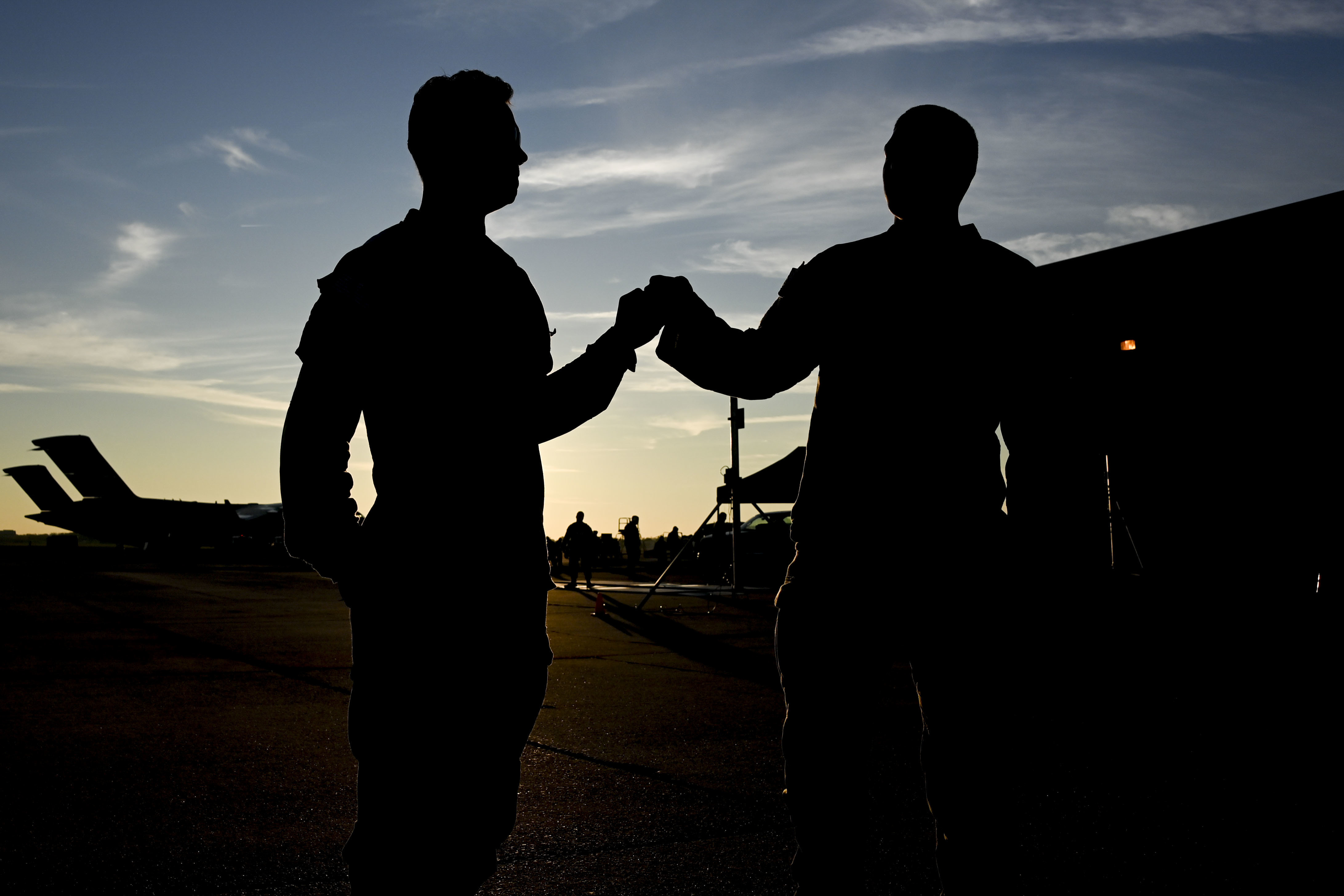
There is no magic formula for what to say when you reach out. In fact, the simplest messages are often the most effective. “Hey — what are you up to?” “How’s it going?” “Thinking about you.” That’s enough.
Josh recently shared that as news was unfolding about military action in the Middle East, his rack mate from basic training sent him a simple message just to touch base. It had nothing to do with current events. It was just a hello. Was it prompted by what was happening overseas? Maybe. Even if it wasn’t, it was well timed. It reinforced connection. It reminded him that someone was there.
When checking in, you don’t have to reference headlines or ask deep questions about someone’s service. A small, genuine check-in can cut through isolation in meaningful ways. Josh explained, “Veterans are used to carrying a lot internally. When the world feels uncertain, that weight can get heavier. What helps isn’t a perfect conversation — it’s consistent connection. Even a meme or a quick text says, ‘You matter, and I’m here.’”
Holding space doesn’t have to be formal or heavy. It can be as simple as saying, “I’m here if you ever want to talk,” without pressure or expectation. It can also look like something far less serious. Sending a meme. Sharing a GIF. Texting about a favorite team. Tagging them in something funny. Sometimes what reminds someone they matter isn’t a deep conversation — it’s a small, ordinary moment of connection that says, “You’re on my mind.”
At the end of the day, you don’t need perfect timing, perfect language, or perfect insight. You simply need to interrupt isolation. A text. A call. A walk. A simple hello.
It may feel small to you. It may mean everything to them.
And that kind of connection can save lives.
GoRoger.org/Get-Help________