
Endurance races ask something honest of us. They demand preparation, persistence, and the willingness to carry discomfort without stopping. For many in our community, that mirrors another journey altogether: moving forward with grief, honoring those we’ve lost, and choosing action even when the weight feels heavy.
At Stop Soldier Suicide, endurance events like the Marine Corps Marathon are about far more than miles logged or finish lines crossed. They are about remembrance and resolve. About raising awareness and raising funds. About standing shoulder to shoulder and saying: we will keep going – together.
For one member of our team, Chris Stephens, this year’s marathon marked another chapter in a deeply personal journey – one shaped by loss, love, and the decision to turn grief into meaningful miles.
___________
There were days immediately following my brother’s suicide that seemed simply impossible.
The questions that would forever be unanswered and gaps that would never be filled.
May 30th, 2017, was the most difficult day of my life.
My brother Mike, a Navy veteran, died by suicide at his home in Cincinnati, Ohio. I was always a phone call away. The phone never rang that night.
Moments after placing a foul ball from our last Cincinnati Reds baseball game together in his casket for safe keeping at his funeral, a friend quietly mentioned to me, “there are some organizations out there doing some amazing things out there for our veterans. It might be good for you to get connected.”
I honestly can’t imagine my life now without that call to action – and specifically I can’t imagine my journey these eight-plus years without Stop Soldier Suicide.
Finding Stop Soldier Suicide allowed me to go from loss survivor to founder of the Miles for Mike community, to supporter, to Facebook Challenge participant, to fundraiser, to unofficial brand ambassador to advocate – and somewhere in there I began to heal.
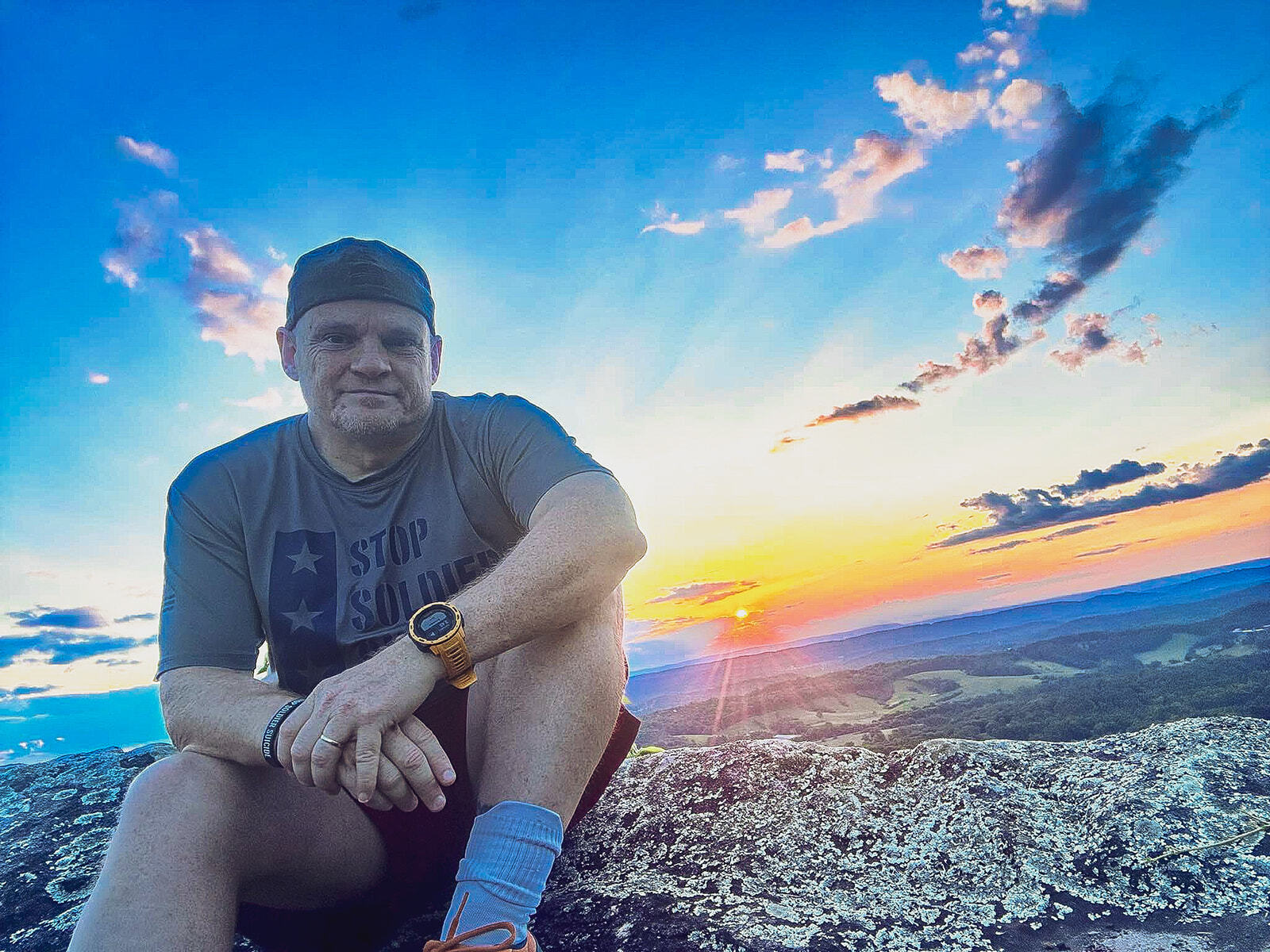
The healing – and advocacy – continued as I joined the team full-time in April of 2023 as marketing coordinator.
I had found the perfect way forward to honor my brother while supporting the military community.
And then we registered a team for the 50th annual Marine Corps Marathon.
And everything changed again.
First, my 10-year marathon hiatus was about to end.
Second, I was no longer going to be the quietest person in the room.
Third, I was about to team up with the most amazing people with similar stories and incredible determination and courage.
For 18 weeks, I trained for the marathon, running nearly 600 miles. But it quickly became about more than the miles.
First, came an opportunity to share Mike’s story and our mission in a newspaper and then a magazine article. Next, were two different podcasts. Then a live appearance on NPR in Atlanta and finally a trip to Washington, D.C., to appear on the Fox affiliate to highlight our team’s efforts ahead of the upcoming marathon.

What an honor. And still, the best was yet to come.
Finally, marathon weekend arrived and the Stop Soldier Suicide team, now 40 runners strong, arrived in Washington, D.C. While we each had our own “why,” we had all answered the call to support this life-saving mission.
What made this effort so special was that we were able to gather in person. While many of us had participated through the years in virtual challenges for SSS, getting to share time at lunch on Saturday and even run some together on Sunday was priceless.
For me, a lasting memory was being able to present two Miles for Mike supporters on our team with old Cincinnati Reds hats once belonging to Mike. It was a moment I’ll never forget.
For me, the marathon was slow, but the miles were meaningful. With my family cheering me on from various locations on the course, I thought of Mike every step of the way. For the final 4 miles I carried our Stop Soldier Suicide flag, running less and reflecting more.
As I crossed the finish line, I felt like I had reached another full circle moment in my journey since losing Mike. Wearing his sweat-soaked Cincinnati Reds hat, the way he always did, I felt as close as him ever.

In many ways, I didn’t want the race to end – I felt like I had spent every day for the past 18 weeks with him and I wasn’t ready to close this chapter.
I know I have so many people to thank for that....
My friend at the funeral who encouraged me to hit that “Get Involved” button at Stop Soldier Suicide.
The entire Stop Soldier Suicide organization who helped me turn my miles into a mission.
The Miles for Mike community that has allowed me to share Mike’s story around the world.
And to the Stop Soldier Suicide Team that joined forces to run the Marine Corps Marathon, thank you. Your stories of connection and determination will never be forgotten.
As sincerely as I can say it, thank you.
___________
Endurance races do not erase grief. They don’t fix what was lost. But they offer something powerful: a way to carry the weight without stopping, to move forward while remembering, and to transform pain into collective action.
When we run together, we honor those we’ve lost. We raise critical funds that expand access to evidence-based care nationwide. We raise awareness that reaches new communities. And we take tangible action – step by step – to prevent future losses.
This is what it looks like to remember and advance at the same time. To move with grief, not around it. And to believe that while the miles may be long, none of us has to carry them alone.
